How to Draft a Fitted Mermaid Gown Pattern: Complete Pattern Guide
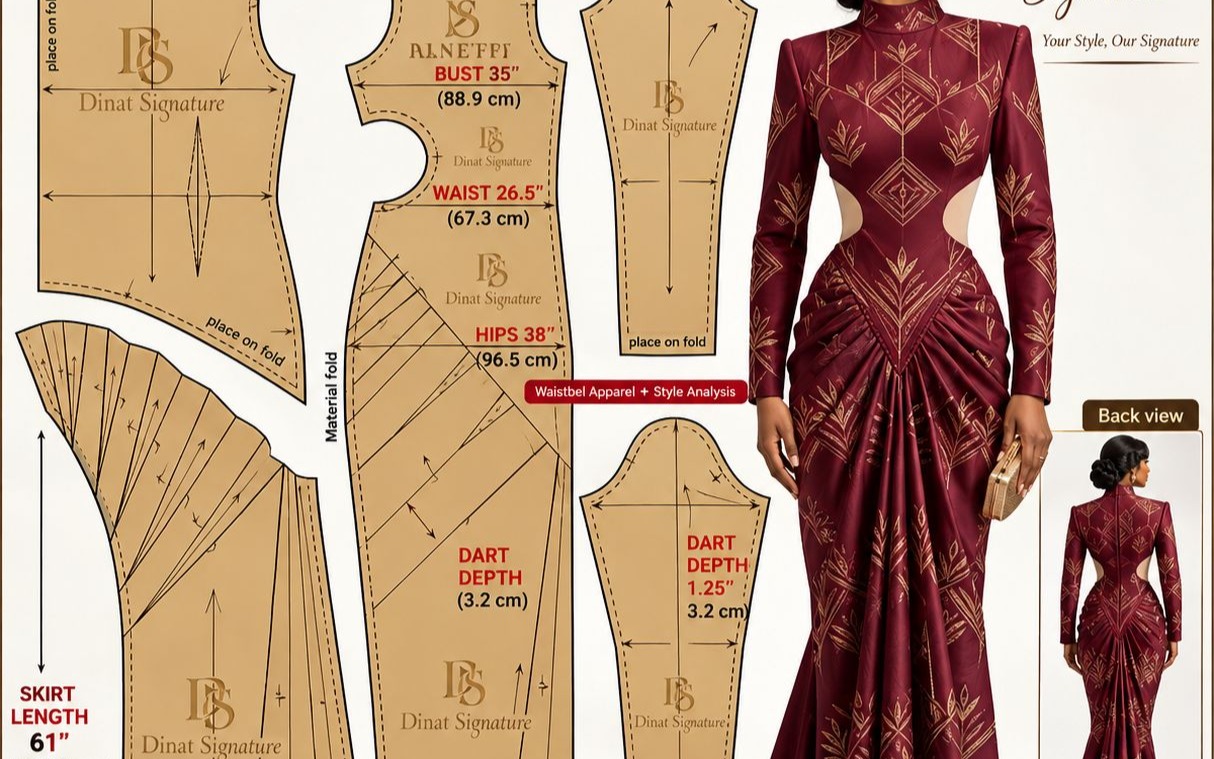
A beautifully fitted mermaid gown begins with a well-drafted pattern. The right pattern allows the designer to achieve a structured bodice, defined waist, shaped hips, fitted sleeves, and a dramatic flared skirt while maintaining a clean and elegant silhouette.
At Dinat Signature, we believe that excellent fashion design combines creativity with precision. This mermaid gown pattern demonstrates how careful pattern drafting and dart manipulation can be used to create a sophisticated, figure-enhancing design.
Understanding the Mermaid Gown Design
The design features a fitted upper bodice that follows the body's natural shape from the bust through the waist and hips before gradually opening into a dramatic mermaid flare.
The gown includes:
A high neckline
Long fitted sleeves
A fitted bodice
Defined waist shaping
Hip shaping
Multiple dart manipulations
A dramatic mermaid skirt
A long sweeping train
A fitted sleeve pattern
A back design that maintains the same elegant silhouette
The finished design creates a sophisticated and elongated appearance while allowing the skirt to flare beautifully towards the hem.
Pattern Measurements
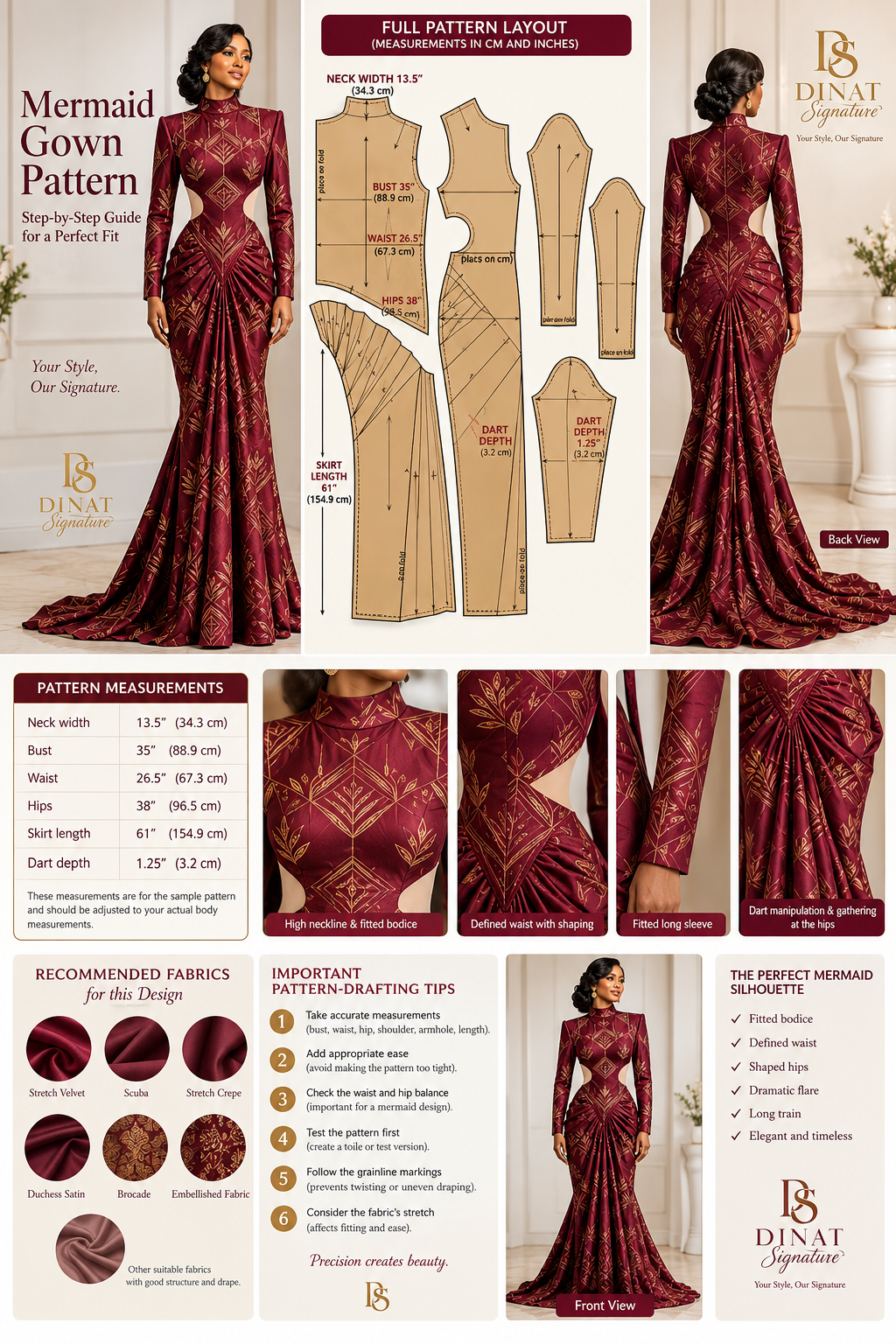
The illustrated pattern uses the following measurements:
Measurement | Size |
|---|---|
Neck width | 13.5 inches (34.3 cm) |
Bust | 35 inches (88.9 cm) |
Waist | 26.5 inches (67.3 cm) |
Hips | 38 inches (96.5 cm) |
Skirt length | 61 inches (154.9 cm) |
Dart depth | 1.25 inches (3.2 cm) |
These measurements represent the sample pattern shown and should be adjusted to the wearer's actual body measurements when creating a custom garment.
Bodice Pattern
The bodice is drafted to create a close, structured fit around the bust, waist and hips.
The front and back bodice pieces include carefully positioned shaping to accommodate the body's curves. The waist is significantly narrower than the bust and hips, so dart manipulation is essential for achieving the fitted silhouette.
The pattern also indicates the place-on-fold areas where applicable. These markings are important because they help ensure that the pattern is positioned correctly on the fabric and maintains the intended symmetry.
Dart Manipulation
Dart manipulation is one of the most important elements of this pattern.
The darts are redistributed across the bodice and skirt sections to create the desired shaping while maintaining the overall fit of the garment.
The illustrated pattern includes a 1.25-inch (3.2 cm) dart depth on the sleeve section and additional dart manipulation on the bodice and skirt.
Proper dart placement allows excess fabric to be removed from areas where shaping is required without compromising the overall design.
Mermaid Skirt Construction
The skirt is where the distinctive mermaid silhouette is created.
Instead of allowing the skirt to fall straight from the hips, the pattern remains fitted through the upper portion before expanding dramatically towards the lower section. Multiple panels and controlled flare create the characteristic mermaid shape.
The illustrated skirt length is 61 inches (154.9 cm).
For a dramatic couture effect, the hem can be extended into a sweeping train, depending on the desired final length and occasion.
Sleeve Pattern
The sleeve is drafted as a fitted long sleeve with a shaped sleeve cap.
The illustrated sleeve includes:
A fitted arm shape
A curved sleeve cap
A 1.25-inch (3.2 cm) dart depth
A place-on-fold indication where applicable
Accurate sleeve measurements are important because the sleeve needs to complement the fitted bodice without restricting movement.
Fabric Considerations
The choice of fabric can significantly affect the final appearance of a mermaid gown.
Fabrics with good structure and drape can help maintain the fitted silhouette while allowing the skirt and train to fall beautifully.
Depending on the desired result, suitable options may include:
Stretch velvet
Scuba or structured stretch fabrics
Stretch crepe
Duchess satin
Brocade
Embellished stretch fabrics
Other suitable fabrics with the right combination of structure and drape
For fabrics with little or no stretch, additional ease and careful fitting may be required.
Important Pattern-Drafting Tips
When drafting this type of gown, precision is essential.
1. Take accurate measurements
Always begin with accurate bust, waist, hip, shoulder, armhole and length measurements.
2. Add appropriate ease
Do not make the pattern excessively tight. The amount of ease should depend on the fabric and the intended fit.
3. Check the waist and hip balance
The transition from the waist to the hips is particularly important in a mermaid design.
4. Test the pattern first
For an important garment, create a toile or test version before cutting into expensive fabric.
5. Check the grainline
The grainline markings on each pattern piece should be followed carefully to prevent twisting or uneven draping.
6. Consider the fabric's stretch
A stretch fabric will require different fitting considerations from a non-stretch fabric.
The Finished Look
When properly drafted and constructed, this pattern produces a sophisticated, figure-hugging mermaid gown with an elegant extended skirt and train.
The burgundy printed version illustrated in this design demonstrates how the placement of a directional fabric can enhance the lines of the garment. The geometric print follows the contours of the bodice and skirt, adding visual interest to the finished piece.
The back view also demonstrates how the fitted silhouette continues through the back before opening into the dramatic mermaid flare.
Final Thoughts
A beautiful couture garment is not created by fabric alone. Good pattern drafting, accurate measurements, thoughtful fabric selection and precise sewing all work together to create the final result.
This mermaid gown pattern is a great example of how traditional pattern-drafting techniques such as dart manipulation, shaping and panel construction can be transformed into an elegant contemporary fashion design.
Watch the Step-by-Step Workshop
Dinat Signature
Dedicated to preserving Nigerian artisanal textile crafts while elevating contemporary pattern cutting, couture construction, and fashion education for makers globally.
Discussion & Feedback 0
Ask tailoring questions, share results, or contribute technical advice.
No comments posted yet
Be the first to share your thoughts or questions regarding this masterclass.
Leave a Comment
Join the conversation. All messages are moderated for respectful dialogue.